What does it actually mean to live well in Rancho Santa Fe? For many buyers, the answer goes beyond square footage or price point. You may be looking for privacy, room to breathe, and a setting that feels carefully preserved rather than overbuilt. This is one of those rare places where community design shapes daily life in a very real way. Let’s dive in.
What Makes Rancho Santa Fe Distinct
Rancho Santa Fe is not just another luxury market in North County. It is a historic planned community in San Diego County, shaped by the 1928 Protective Covenant and still managed by the Rancho Santa Fe Association. The community covers about 10 square miles, or 6,730 acres, and has roughly 4,300 residents.
That structure matters because it influences how the area looks, feels, and functions. The Association describes itself as operating much like a small city, with building, planning, parks and recreation, and 24-hour security services. For you as a buyer or future resident, that often translates to a more intentional living environment.
Estate Living Shapes the Lifestyle
One of the clearest features of Rancho Santa Fe is its low-density layout. The Association states that the average lot size is more than two acres, which helps explain the sense of space you feel throughout the community. Instead of a typical suburban pattern, you get a landscape defined by rolling countryside, long drives, and estate-scale homes.
County planning materials reinforce that identity. They describe large estate homes, often paired with agricultural groves or equestrian facilities. If you are drawn to a rural-residential atmosphere without giving up access to North County amenities, this setting stands out.
Large lots do more than create visual appeal. They also support privacy by design. In Rancho Santa Fe, that quiet separation between homes is part of the lifestyle, not an accidental bonus.
History Still Guides the Community
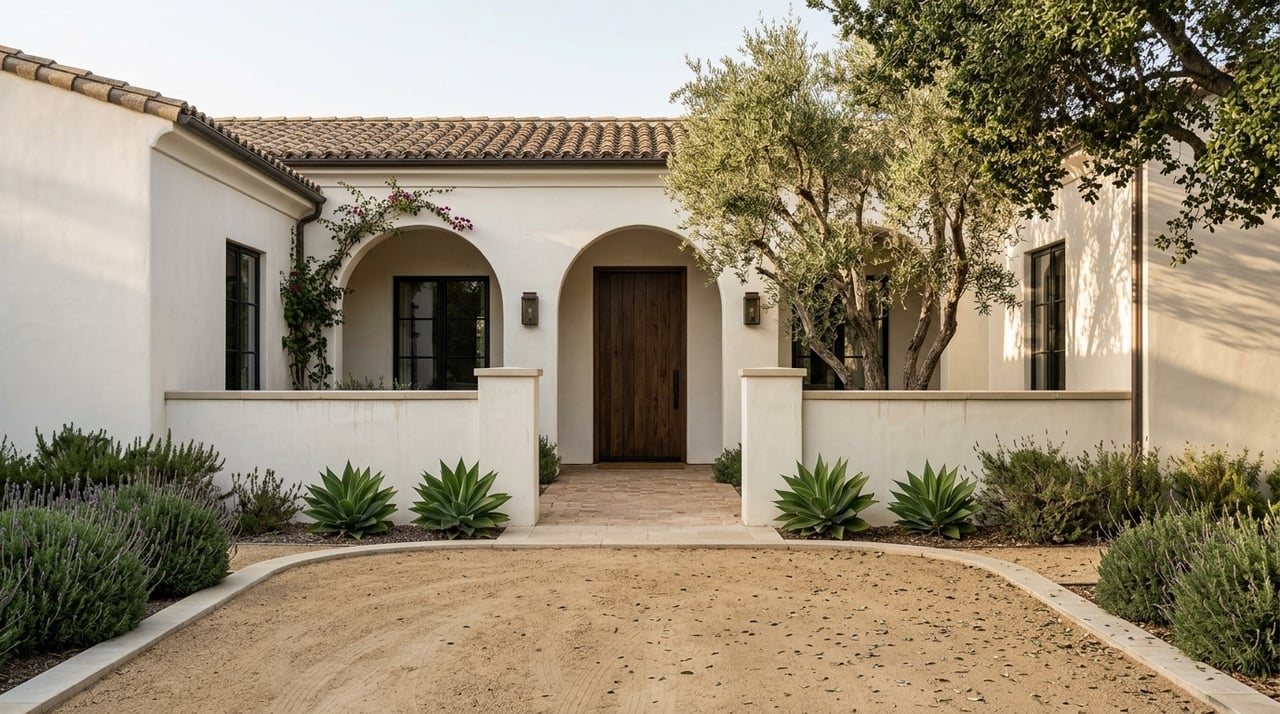
Rancho Santa Fe has a strong planning legacy, and that history is still visible today. California State Parks identifies it as one of the state’s first planned communities, unified by a Spanish Colonial Revival theme. The Library of Congress notes that the original plan emphasized a small civic center, curved roads that followed the terrain, and a deliberate design framework.
That original vision continues to shape the area. The Rancho Santa Fe Association says the Protective Covenant remains the principal governing document, supported by design standards intended to preserve landscape features and architectural continuity. In practical terms, this means the community experience is closely tied to long-term preservation.
For buyers who care about architecture, setting, and consistency, that can be a major part of the appeal. Rancho Santa Fe is not simply expensive real estate. It is a place where design rules have helped protect a distinct sense of place over time.
The Village Adds Everyday Convenience
At the center of the Covenant is the Village of Rancho Santa Fe. The Association describes it as home to shops, restaurants, other commercial businesses, and the historic Inn at Rancho Santa Fe. This gives residents a small but meaningful hub for day-to-day life.
What makes the Village different is its design discipline. According to the Association’s commercial guidelines, the area is meant to remain pedestrian-oriented and human-scale, with red tile roofs, arcades, courtyards, simple massing, and restrained architectural forms. The result is a commercial center that feels cohesive with the broader community rather than visually disconnected from it.
That matters if you value a lifestyle where daily errands and casual outings still feel in step with the area’s character. The Village is not trying to be loud or oversized. It supports a quieter, more refined rhythm of living.
Community Life Has a Local Rhythm
Living well also means having reasons to participate in the place around you. Rancho Santa Fe offers that through a mix of seasonal events and local history. The Association highlights events like Celebrate Osuna, Halloween in the Village, and Rancho Days.
The Rancho Santa Fe Historical Society adds another layer. Through walking tours, exhibitions, archives, and educational programming, it helps residents and visitors better understand the area’s history. If you appreciate communities with continuity and civic identity, this kind of programming can deepen your connection to where you live.
Trails and Open Space Matter Here
In some communities, trails are an extra perk. In Rancho Santa Fe, they are part of the physical framework. The Association says the Covenant includes nearly 60 miles of private equestrian and pedestrian trails for residents and guests.
That trail network supports a very different day-to-day experience than you might find in a denser neighborhood. You have room for walking, riding, and moving through the landscape in a way that feels connected to open space. Some trail segments even loop around the golf course and offer views of surrounding estate homes.
The scale of the trail system also says something about the community’s priorities. These are not leftover paths squeezed into a development plan. They are part of a longstanding commitment to preserving the area’s rural and recreational identity.
Equestrian Culture Is Built In
Rancho Santa Fe’s equestrian identity is not just about aesthetics. It is supported by real infrastructure and active use. The Association notes that many trails are wide enough for two riders to travel side by side, which reflects how intentionally the community has supported horse-friendly access.
Osuna Ranch is a strong example of that tradition. The Association describes it as a 25-acre historic property with walking paths, grass pastures, boarding, and a working horse facility that can house nearly 50 horses. It also includes training through Hap Hansen Stables, along with multiple stalls and paddocks.
Even county transportation planning reflects this lifestyle. In work related to Rancho Santa Fe roundabouts, San Diego County explicitly includes pedestrian, cyclist, and equestrian connectivity, including trail connections and equestrian crossing treatment. That tells you this is still a living part of the community, not just a legacy detail.
Private Clubs Expand the Lifestyle
For many residents, club life is another key part of living well in Rancho Santa Fe. The Rancho Santa Fe Golf Club, operated by the Association, is available to Association property owners and is described as a private, Max Behr-designed 6,700-yard par-72 course that opened in 1929. The Association also notes its role as the original site for Bing Crosby’s early clambakes, giving it both recreational and historical significance.
The Rancho Santa Fe Tennis Club adds another layer. It is a private facility for Association members and guests, with hard courts, clay courts, pickleball courts, instruction, and social events. Together, these club offerings help create a more self-contained residential experience.
Beyond the Covenant, the broader Rancho Santa Fe area includes additional private clubs such as The Bridges, The Farms, La Valle Coastal Club, Fairbanks Ranch Country Club, and Del Mar Country Club. These clubs offer combinations of golf, racquet sports, fitness, dining, spa, and social amenities. For some buyers, that variety is a major reason the area feels like a full lifestyle market rather than simply a place to own a home.
Privacy Comes From Design
If there is one idea that ties Rancho Santa Fe together, it is this: privacy here is created through planning. Large lots, preserved architecture, private trails, a compact village center, and member-based club culture all work together to shape the experience of living here.
That can be especially appealing if you are relocating from a denser part of Southern California or looking for a more grounded, estate-oriented setting. The appeal is not only visual. It is functional, from how roads follow the terrain to how open space and amenities are integrated into the community.
What Buyers Should Consider
If Rancho Santa Fe is on your shortlist, it helps to look beyond the headline features. The lifestyle is often best suited to buyers who value:
- Larger land parcels and lower density
- A preserved architectural and landscape identity
- Access to private trails and equestrian amenities
- A small village core rather than a major retail district
- Club-based recreation and social life
- A more private, design-conscious living environment
It is also wise to understand that the Protective Covenant and Association oversight play a meaningful role in how the community operates. For the right buyer, that structure is part of the value because it helps preserve the character that makes Rancho Santa Fe so distinctive.
Why Local Guidance Matters
In a place like Rancho Santa Fe, lifestyle fit matters just as much as property fit. Two homes with similar size or finish level can offer very different day-to-day experiences depending on lot placement, trail access, village proximity, or connection to the Covenant area. That is where thoughtful, detail-oriented guidance becomes especially valuable.
If you are buying, selling, or relocating, it helps to work with someone who can give you both the market context and the lifestyle context. That is often the difference between finding a beautiful house and choosing the right long-term fit.
If you want a more strategic, design-aware perspective on Rancho Santa Fe real estate, connect with Trinton Hurt for thoughtful guidance tailored to your next move.
FAQs
What is daily life like in Rancho Santa Fe?
- Daily life in Rancho Santa Fe is shaped by large lots, a small village center, private trails, club amenities, and a community layout designed to preserve privacy and rural-residential character.
What makes Rancho Santa Fe different from other North County communities?
- Rancho Santa Fe stands out for its historic Protective Covenant, estate-scale lots, preserved Spanish Colonial Revival design influence, private trail system, and strong club and equestrian culture.
Does Rancho Santa Fe have a walkable town center?
- Rancho Santa Fe has a compact Village center with shops, restaurants, commercial businesses, and the historic Inn at Rancho Santa Fe, designed to be pedestrian-oriented and human-scale.
Is equestrian living still part of Rancho Santa Fe today?
- Yes. The community includes nearly 60 miles of private equestrian and pedestrian trails, and places like Osuna Ranch show that horse facilities and riding infrastructure remain an active part of the area.
Are there private clubs in Rancho Santa Fe?
- Yes. Within the Covenant, the Rancho Santa Fe Golf Club and Rancho Santa Fe Tennis Club are key amenities, and the broader area includes several additional private golf, racquet, fitness, dining, and social clubs.
Who is Rancho Santa Fe a good fit for?
- Rancho Santa Fe may appeal to buyers who want space, privacy, architectural continuity, equestrian or club lifestyle access, and a more intentional community setting within North County San Diego.