City living can feel exciting on paper, but the day-to-day reality matters more. If you are thinking about condo living in Hillcrest, you probably want to know what life actually feels like once the moving boxes are gone. From walkable errands to building style, parking, transit, and HOA details, here is what everyday urban living in Hillcrest condos really looks like. Let’s dive in.
Why Hillcrest Feels So Urban
Hillcrest is one of San Diego’s most pedestrian-oriented neighborhoods, and that shapes condo life in a very real way. The City of San Diego describes it as a mixed-use area with restaurants, stores, medical offices, two major hospitals, and a strong concentration of local businesses woven into the neighborhood fabric.
Instead of feeling separated into neat residential and commercial zones, Hillcrest tends to blend them together. That means your coffee run, grocery stop, dinner plans, and daily appointments may all happen within the same few blocks.
The neighborhood’s commercial core centers around Fifth Avenue and University Avenue. Planning documents describe this area as a vibrant, walkable district with a dense mix of retail, office, mixed-use, and entertainment uses, which helps explain why condo living here feels more connected and active than in many car-dependent parts of the region.
What Hillcrest Condo Buildings Look Like
Hillcrest condos come in a range of building styles, and that variety is part of the appeal. Some buildings sit in lower-scale residential pockets, while others rise closer to the main corridors near Fifth Avenue, Park Boulevard, and University Avenue.
City planning guidance breaks the area into several building types:
- Low-rise residential buildings are generally 1 to 3 stories
- Low-rise mixed-use buildings are typically 3 stories or less
- Mid-rise mixed-use buildings are usually 4 to 7 stories
- High-rise mixed-use buildings are 8 stories or more
In practical terms, that means you can find very different living experiences within the same neighborhood. One condo might feel tucked into a quieter street with older architectural character, while another may sit in a more modern building near the commercial core with broader city, park, or bay views.
Hillcrest also reflects a mix of old and new design language. Official planning materials note architectural influences such as Craftsman, Bungalow, Prairie, Mission, and Spanish Revival in older residential areas, while newer infill development is intended to complement the neighborhood’s scale and character.
Inside a Typical Hillcrest Condo
If you are comparing Hillcrest condos, you will likely see a fairly broad mix of layouts. Current listing examples show studios, one-bedroom homes, one-bedroom lofts, and two-bedroom, two-bath units as common formats in the area.
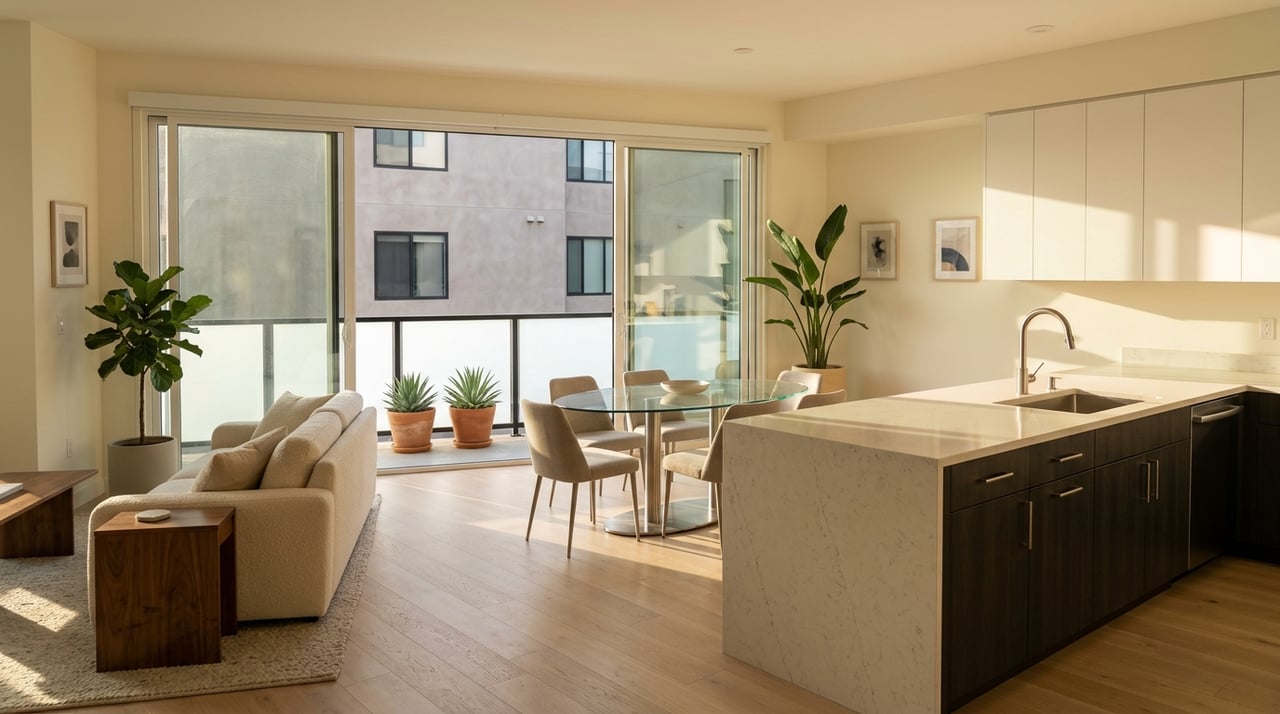
Many units lean into the urban condo essentials buyers ask for most. Features shown in current listings include open-concept kitchens, split-bedroom layouts, private balconies, in-unit laundry, storage, elevator access, and gated or underground parking.
Some homes are more design-forward than others. Hillcrest also includes loft-style spaces with exposed brick or concrete, high ceilings, and flexible live-work layouts, which can appeal if you want something with more personality than a standard suburban floor plan.
Daily Life Is Built Around Walkability
One of the biggest reasons people choose Hillcrest condo living is simple: convenience. The neighborhood’s business district supports a lifestyle where many day-to-day needs can be handled close to home, often without a long drive.
That does not mean every errand is effortless or that every resident lives car-free. It means the neighborhood was built to support a more connected daily rhythm, where restaurants, local businesses, medical services, and community events are part of your regular routine.
The Hillcrest Business Association has represented local businesses for more than 100 years and helps organize neighborhood promotions and events. That long-standing commercial identity gives the area an active, lived-in feel rather than the atmosphere of a purely residential enclave.
The Farmers Market Shapes the Week
If you want a good example of Hillcrest’s neighborhood rhythm, look at Sunday. The Hillcrest Farmers Market runs year-round from 9 a.m. to 2 p.m. on University Avenue between Herbert Street and Park Boulevard.
According to the market’s official information, it features more than 175 vendors and draws more than 10,000 weekly visitors. Produce, prepared foods, flowers, crafts, clothing, and live local music all contribute to the experience.
For condo residents, that can be a major lifestyle perk. It gives you a predictable weekly event right in the neighborhood, but it also means Sunday street closures and transit detours are part of the normal pattern, especially near the market area.
Close to Medical and Cultural Anchors
Hillcrest’s daily energy is also shaped by its institutional anchors. Scripps Mercy Hospital is located near Fifth Avenue and Washington Street, and UC San Diego Health’s Hillcrest Medical Campus includes multiple facilities in the area.
That medical presence affects traffic, movement, and neighborhood demand in ways that matter to residents. It also adds a practical layer of convenience for people who value being near healthcare services, clinics, and supporting businesses.
Balboa Park is another major part of the lifestyle equation. Its proximity supports a condo experience that blends city living with access to green space, culture, and public programming, which is not something every urban neighborhood can offer so easily.
Transit, Cars, and Parking Matter Here
Hillcrest is well served by bus routes, even though it is not directly on the trolley line. MTS routes 1, 3, 10, and 11 all serve Hillcrest-area corridors and destinations, connecting the neighborhood to broader parts of San Diego.
That gives you options if you prefer transit for some trips, commute to nearby districts, or simply want flexibility. MTS also notes that buses on all routes are accessible by lift or ramp, and Route 11 operates seven days a week through the Uptown corridor.
Still, condo buyers should pay close attention to parking. Hillcrest’s urban street grid, long rectangular blocks, and mid-block alleys have shaped how many buildings handle access, including rear-alley entries, podium parking, or tucked-under parking instead of front-loaded suburban layouts.
That can be efficient, but it also means parking setups vary a lot from building to building. If you own a car, use guest parking often, or expect easy garage access during busy weekends, these details deserve close review.
Why Traffic Patterns Can Affect Your Choice
In a neighborhood like Hillcrest, location within the neighborhood matters almost as much as the neighborhood itself. A condo near the core may offer stronger walkability and a more immediate urban feel, but it may also come with more street activity, event traffic, and weekend circulation issues.
Sunday farmers market closures can affect University Avenue access, and MTS service alerts note detours tied to those closures. UC San Diego Health also notes ongoing redevelopment-related traffic activity around the Hillcrest campus area, including corridor updates such as traffic signals, street lighting, and dedicated bike lanes on Bachman Place.
None of that is automatically good or bad. It simply means your ideal fit may depend on whether you prioritize walk-out-the-door convenience, quieter positioning, easier parking, or a balance of all three.
HOA Living in a Hillcrest Condo
If you are moving from a detached home or renting for the first time in a condo building, HOA structure is one of the biggest adjustments. In California, condos are usually part of a common interest development, where you own your unit and also hold an undivided interest in shared common areas.
The California Department of Real Estate notes that governing documents typically include CC&Rs, and that some spaces such as patios, parking spaces, or yards may be designated as exclusive-use common area. That distinction matters because a space may feel private in practice while still being governed by association rules.
The HOA board is generally responsible for budgets, insurance, financial statements, common-area contracts, dues enforcement, and elections, among other duties. California law also requires associations to provide annual budget information and reserve summaries, and to conduct reserve-study inspections on major components at least every three years when required by law.
What Buyers Should Review Before Buying
Hillcrest condo living often means a tradeoff. You may gain location, lock-and-leave convenience, and shared amenities, while giving up private yard space and taking on HOA rules, dues, and building policies.
Before you buy, it is smart to review the documents that shape daily ownership and future costs. In most cases, the most useful items include:
- CC&Rs
- HOA rules and regulations
- Current budget
- Reserve summary
- Insurance summary
- Recent meeting materials
These documents can tell you a lot about the building beyond the photos. They help you understand how the property is managed, how shared expenses are handled, and whether the building’s policies match the way you want to live.
Is Hillcrest Condo Living Right for You?
Hillcrest works well for buyers who want an urban neighborhood with texture, convenience, and a strong sense of place. It is especially appealing if you value walkability, local business activity, varied architecture, and access to both city amenities and nearby green space.
It may also suit you if you like design-conscious homes, from loft-style spaces to newer mixed-use buildings with balconies, elevators, and secured parking. At the same time, it helps to be realistic about traffic, street activity, parking limitations, and the responsibilities that come with HOA living.
The right condo in Hillcrest is rarely just about square footage. It is about how the building, block, parking setup, and daily neighborhood rhythm line up with your version of city life.
If you are weighing Hillcrest against other San Diego neighborhoods, or trying to figure out which building details matter most for your lifestyle, a thoughtful local strategy makes a big difference. To talk through your options with clear, candid guidance, connect with Trinton Hurt.
FAQs
What is everyday condo living like in Hillcrest, San Diego?
- Everyday condo living in Hillcrest is shaped by walkability, mixed-use streets, local businesses, nearby medical campuses, bus access, and recurring neighborhood activity like the Sunday farmers market.
What types of condo buildings are common in Hillcrest?
- Hillcrest includes low-rise residential buildings, low-rise mixed-use buildings, mid-rise mixed-use buildings, and some high-rise mixed-use buildings, with taller structures concentrated closer to major corridors such as Fifth Avenue, Park Boulevard, and University Avenue.
What floor plans are common in Hillcrest condos?
- Current listing examples suggest that common Hillcrest condo layouts include studios, one-bedroom units, one-bedroom lofts, and two-bedroom, two-bath homes.
What amenities do Hillcrest condos often have?
- Features shown in current listings include open-concept kitchens, private balconies, in-unit laundry, elevator access, storage, and gated or underground parking.
How does parking work in Hillcrest condo buildings?
- Parking varies by building, but Hillcrest’s urban layout often supports rear-alley access, podium parking, or tucked-under parking, so buyers should review garage access, assigned spaces, and guest parking closely.
How do HOAs work in Hillcrest condos?
- In California condo communities, owners usually own their unit plus a shared interest in common areas, while the HOA manages budgets, insurance, maintenance obligations, rules, and other building operations under the governing documents.
What should buyers review before buying a Hillcrest condo?
- Buyers should carefully review the CC&Rs, HOA rules, budget, reserve summary, insurance summary, and recent meeting materials to better understand costs, policies, and building management.